
Key takeaways
- Content-creator income is taxable in Belgium from the first euro: the only question is under which regime.
- Everything hinges on the distinction between miscellaneous income (occasional activity) and professional income (regular and organised activity).
- Becoming self-employed does not depend on a threshold in euros but on the regularity of the activity; the start is often on a secondary basis.
- Income from foreign platforms (Google, Twitch) and sponsorship frequently triggers a VAT obligation, even below the exemption threshold.
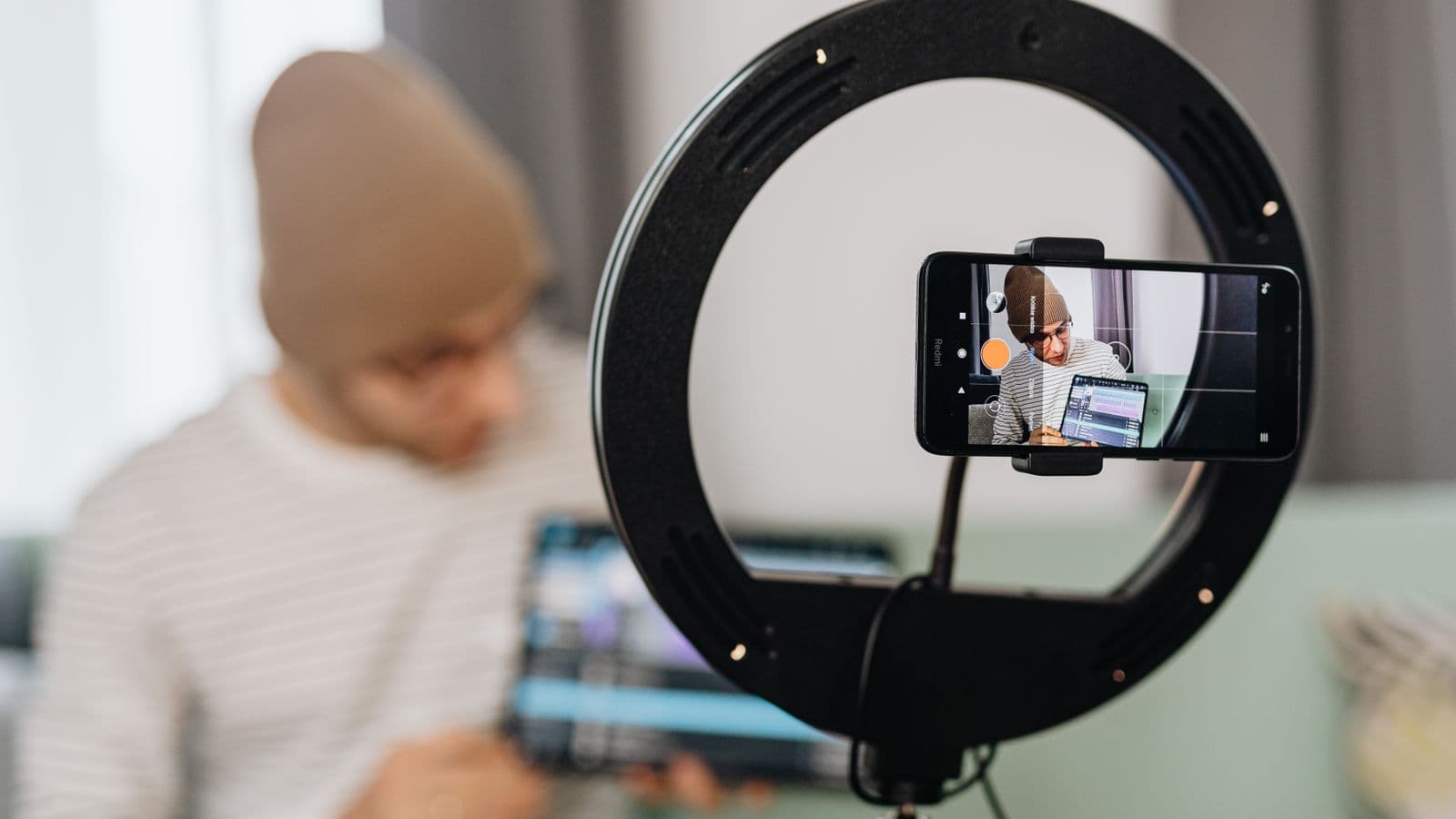
A Belgian YouTuber receiving their first AdSense income, a Twitch streamer cashing in Super Chats, an Instagram creator paid by a brand: all ask themselves the same question at the wrong moment, that is, after being paid. The taxation of the content creator in Belgium does not depend on the platform or the amount, but on a precise legal split between the occasional and the professional. This article applies to the creator's case the Belgian tax and social rules: from when your income becomes professional, when to register as self-employed, and why YouTube or Twitch can impose a VAT number on you sooner than expected.
Content-creator income: hobby or taxable activity
First idea to correct: there is no non-taxable zone because "it's just a hobby". In Belgian tax law, income received is in principle taxable. What varies is the category into which it falls and therefore the applicable regime.
For a content creator, the sources are multiple and do not all have the same treatment in fact: advertising income (YouTube AdSense, revenue sharing), subscriptions (YouTube Premium, Twitch subscriptions), viewers' donations and Super Chats, sponsorship and product placement, affiliation, sale of merchandise. The administration does not look at the platform's name, it looks at the nature of the activity that generates these flows.
The dividing line is therefore not "how much" but "how": an occasional and disinterested activity is not treated like a channel fed in a regular, structured and income-oriented way. It is this qualification that determines everything else.
Miscellaneous income or professional income: the distinction that changes everything
The Income Tax Code distinguishes two regimes that may affect a creator. Miscellaneous income targets occasional operations, outside the normal management of private assets and outside an organised professional activity. Professional income targets an activity carried out habitually and in an organised way, for profit.
The decisive criterion is regularity and organisation. An isolated viral video that pays once may fall under miscellaneous income. A channel published on a schedule, with equipment, an audience strategy and recurring receipts, is a professional activity. The FPS Finance assesses this qualification case by case, on the reality of the facts and not on the creator's declaration of intent.
| Miscellaneous income | Professional income | |
|---|---|---|
| Nature of the activity | Occasional, not organised | Regular, habitual and organised |
| Tax regime | Distinct rate provided by the ITC | Progressive scale of PIT |
| NISSE social contributions | ||
| Self-employed status required | ||
| VAT | In principle out of scope | Liability depending on the activity |
| Deduction of actual costs | Limited | Actual professional costs deductible |
In terms of figures, occasional profits qualified as miscellaneous income are in principle subject to a distinct rate, generally 33%, to which municipal surcharges are added (art. 171 of the Income Tax Code 1992). Professional income is added to your other income and follows the progressive scale of personal income tax, with in return the deduction of your actual professional costs and the obligation of social contributions. For the detail of rates and thresholds, always check the situation with the FPS Finance.
Declaring recurring income as miscellaneous income because the rate seems simpler is risky. If the administration requalifies the activity as professional, it claims tax on the progressive scale, retroactive social contributions and, where applicable, VAT. The requalification is made on the facts, not on the box you ticked.
When a content creator must become self-employed
As soon as the activity tips to the professional side, the social status follows: you must register as self-employed. No magic amount triggers this obligation, it is the regularity and organisation of the activity that create it. In practice, many creators cross this threshold gradually, and most start on a secondary basis.
- 1
Occasional activity
Start-upA few isolated pieces of content, one-off income. Possible classification as miscellaneous income, without self-employed status.
- 2
Secondary self-employed
Regular secondary activityThe activity becomes regular but stays secondary to a job or studies. Registration with the CBE and affiliation with a social insurance fund, with lightened contributions below a threshold.
- 3
Main self-employed
Main activityContent creation becomes your dominant source of income. Full social contributions, accounting obligations and full VAT.
- 4
Switch to a company
Ramp-upWhen income and asset-protection needs justify it, setting up an SRL becomes relevant.
Starting as secondary self-employed in Belgium is the natural route for a creator who already has a job or studies: it lets you test viability with reduced contributions below a certain income threshold. If creation becomes your dominant activity, you switch to a main basis. The general framework of the steps is detailed in our guide to becoming self-employed in Belgium.
When you move to a professional activity
Affiliate with a social insurance fund
Before the start of the regular activity, with a fund approved by NISSE.
Register with the Crossroads Bank for Enterprises
Via an approved enterprise counter, to obtain an enterprise number.
Check your VAT situation
Identify whether income from foreign platforms requires a VAT number, even under exemption.
Keep accounts from day one
Keep the supporting documents for each flow (AdSense, sponsorship, donations) and for professional costs.
Document the origin of each income
Distinguish advertising, subscriptions, donations, sponsorship and affiliation to apply the right treatment.
I thought I would declare my YouTube income once a year, like an extra. The reality is that as soon as the channel runs, you are a self-employed person with the same obligations as any provider.
VAT on YouTube, Twitch and sponsorship: the trap of foreign platforms
This is the point that most creators discover too late. The income Google (AdSense), Twitch or an advertiser established abroad pays you is not a gift: legally, you provide a service to a company located in another country. These service supplies between taxable persons (B2B) are in principle located at the customer's, which triggers the reverse-charge mechanism.
Concrete consequence: even if your turnover stays below the VAT exemption threshold, the fact of supplying services to a foreign taxable person generally requires obtaining a VAT number and filing an intra-community statement. The exemption scheme, which exempts you from charging VAT in Belgium, does not exempt you from this identification for cross-border operations.
The rules on exemption, rates and identification also apply to you: they are detailed in our guide on VAT for the self-employed in Belgium. The creator's specificity lies in the share of income coming from foreign platforms and advertisers, which tips you faster into cross-border obligations. When in doubt, invoice nothing without having your regime validated.
Switching to a company when income takes off
As long as income stays modest, operating as a natural person (self-employed) is enough. When the channel generates high and regular income, setting up a company, most often an SRL, becomes an option to study seriously.
Advantages
- Taxation of profits under corporate income tax rather than at the top of the PIT scale
- Separation of private and professional assets
- A more structured image with advertisers and partners
- Optimisation of remuneration between salary and dividends
Disadvantages
- Incorporation costs and recurring running costs
- Full accounting and account-filing obligations
- Management formalism (meetings, decisions, register)
- Relevance only above a certain level of stable income
The calculation depends on your income level, its stability and your plans. The workings of the corporate income tax in Belgium will help you compare the two scenarios with the figures in hand. Before crossing this threshold, have your situation simulated: switching to a company too early costs more than waiting for the right moment.
Structuring your creator activity?
Monsiegesocial supports you in launching your self-employed activity, registering with the CBE and setting up your company when the time is right.
The taxation of the content creator is not a separate regime: it is the application to the world of platforms of existing Belgian rules. Remember the thread: occasional or professional, it is regularity that decides, and once professional, self-employed status, PIT, social contributions and VAT follow. Putting this framework in place early avoids requalification and retroactive back-claims.
Going further
- Secondary self-employed in Belgium: the most common start-up route for a creator who already has a job or studies.
- Becoming self-employed in Belgium: the full steps to become compliant when the activity becomes professional.
- VAT for the self-employed in Belgium: exemption, rates and obligations, including the case of services abroad.
- The FPS Finance for the distinction between miscellaneous and professional income, and NISSE for the self-employed social status.