
Key takeaways
- Domiciliation in Bruges is legal provided the provider is registered with the FPS Economy's Directorate-General for SME Policy (law of 29 March 2018); operating without registration is punishable by a fine of €250 to €100,000.
- The Companies and Associations Code, in force since 1 May 2019, requires Dutch for the articles of association and deed of incorporation of any company whose registered office is in the Dutch-language region.
- Bruges is the capital of West Flanders Province, a UNESCO World Heritage city and the seat of the College of Europe.
- The port of Zeebrugge, part of Bruges, has been part of Port of Antwerp-Bruges since 2022, Europe's leading export port.
- CBE registration costs €111.50 per establishment unit in 2026 (statutory rate indexed annually, the same throughout Belgium).
Choosing Bruges for a company's registered office means anchoring its legal identity in the capital of West Flanders Province, a city listed as a UNESCO World Heritage site since 2000 and an economic hub built on tourism, crafts and the port logistics of Zeebrugge. Company domiciliation in Bruges serves a clear purpose: an internationally recognisable image, a dense fabric of SMEs active in hospitality and services, and direct access to Europe's leading export port. This guide sets out what makes Bruges distinctive, recalls the legal framework that applies throughout Belgium and details the steps for registering your Bruges registered office.
Bruges, tourism and port capital of West Flanders
The Bruges economy rests on several pillars that give it a recognisable commercial identity.
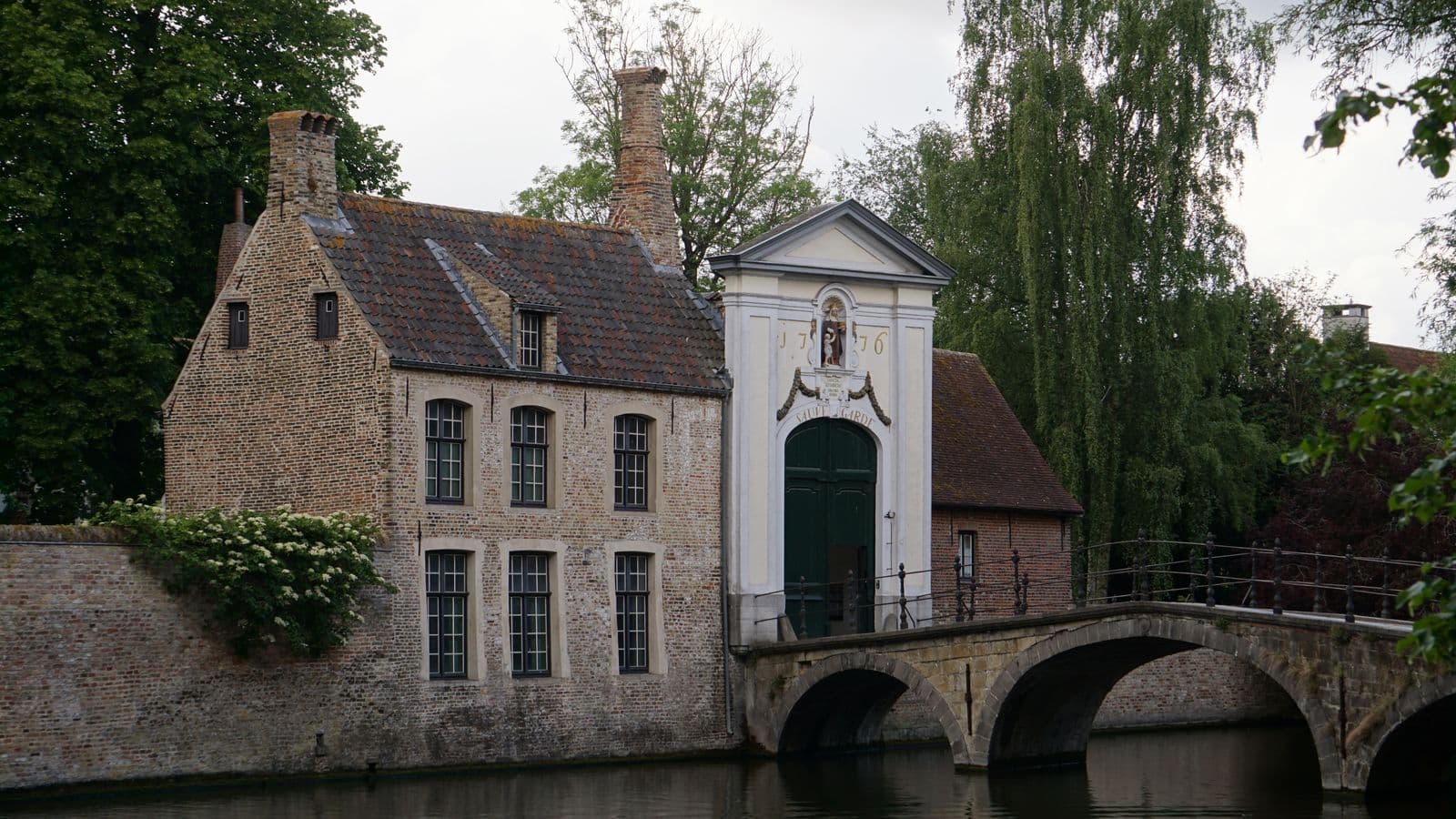
The historic centre of Bruges, a UNESCO World Heritage site since 2000, makes the city one of the most visited destinations in Belgium. This status underpins a dense fabric of SMEs active in hospitality, catering, retail and crafts (lace, chocolate), for whom a Bruges registered office address strengthens local anchoring with customers and partners.
Bruges has also been linked, since 2022, to Port of Antwerp-Bruges, born from the merger of the ports of Antwerp and Zeebrugge and now Europe's leading export port. The port of Zeebrugge, specialised notably in vehicle traffic, anchors a logistics and industrial activity to which a Bruges address gives immediate proximity.
Bruges is also home to the College of Europe, a university institution specialising in European studies founded in 1949, which gives the city an international and academic profile beyond its heritage image. As the provincial capital, Bruges also hosts the West Flanders provincial administration, an asset for providers of services to businesses and local public authorities.
What company domiciliation means
Every Belgian company has a registered office: the official address stated in its articles of association and registered with the Crossroads Bank for Enterprises (CBE). This is not necessarily where you work day-to-day; it is the company's legal address, the one at which it receives official correspondence and to which it is administratively linked.
Domiciliation means establishing this statutory registered office at the address of a specialised provider rather than at your private home or in premises you rent alone. The Companies and Associations Code (CAC), which came into force on 1 May 2019, requires every company governed by Belgian law to have its statutory registered office on Belgian territory; a domiciliation address in Bruges fully satisfies this requirement. The provider makes the address available and, depending on the contract, receives and manages your mail.
To help you decide between establishing your registered office at your home or with a dedicated provider, see our guide on using a business address or your home as your registered office.
What the law says about domiciliation in Bruges
Domiciling a company is legal. Providing a registered office address to companies on a professional basis, however, has been a regulated activity since 2018.
The law of 29 March 2018 providing for the registration of providers of company services requires every domiciliation provider to register with the FPS Economy's Directorate-General for SME Policy before operating. Article 11 of this law punishes failure to register with a fine of €250 to €100,000. In practice, once an address is chosen, the registered office is recorded with the CBE via an accredited business counter, at a rate set by royal decree and the same throughout Belgium.
PSP law
mandatory registration of providers with the FPS Economy
fine
unregistered provider (article 11 of the law)
CBE fee
per establishment unit in 2026, same throughout Belgium
A point specific to Flanders: the CAC, in its language provisions, requires that the articles of association and deed of incorporation be drafted in the language of the linguistic region where the registered office is located. As Bruges is in the Dutch-language region, your articles must be in Dutch. For French-speaking founders, this means appointing a bilingual notary for the incorporation.
Domiciling in Bruges: advantages and points to watch
From a strictly legal standpoint, a Bruges address confers the same rights and obligations as an address in Ghent, Antwerp or Brussels. The choice comes down to image, commercial coherence and the local ecosystem.
Advantages
- Strong heritage and international image, backed by the UNESCO listing of the historic centre
- Dense fabric of tourism, hospitality and craft SMEs
- Proximity to Port of Antwerp-Bruges via Zeebrugge for logistics and international trade
- Academic and institutional profile with the College of Europe and the provincial administration
- Same legal validity as a Ghent or Antwerp address
Disadvantages
- Articles of association and deed of incorporation must be in Dutch under the CAC's language provisions: potential additional notarial costs for French-speaking founders
- Bruges administrations operate in Dutch for official correspondence
- Commercial property market constrained by heritage rules in the listed historic centre
Bruges compares naturally with Ghent and other Flemish cities. For a broader view, read our overview of company domiciliation in Flanders, which also covers Antwerp, Ghent and the Flemish suburbs of Brussels.
Steps for domiciling your company in Bruges
The procedure is the same as elsewhere in Belgium, with the additional step of choosing a notary who works in Dutch for the company incorporation.
- 1
Choose a provider registered with the FPS Economy
Step 1Check the provider's registration in the FPS Economy's public register before signing. An unregistered provider is not compliant.
- 2
Sign the domiciliation contract
Step 2The contract formalises the provision of the Bruges address. Check the minimum duration requirements and termination conditions with the accredited business counter before signing.
- 3
Appoint a bilingual notary for the incorporation
Step 3The deed of incorporation and articles must be drafted in Dutch. A bilingual notary (Dutch-French) makes it easier for French-speaking founders to understand the deed without departing from the language requirement.
- 4
Include the address in the articles in Dutch
Step 4The Bruges registered office is stated in the articles drafted in Dutch and published in the Annexes to the Belgian Official Gazette (Belgisch Staatsblad).
- 5
Register with the CBE
Step 5The address is registered with the Crossroads Bank for Enterprises via an accredited business counter, at the statutory rate of €111.50 per establishment unit in 2026.
Points to verify before signing
The provider's registration with the FPS Economy
The register is public; an unregistered provider is not compliant and may put your registered office at risk.
Minimum contract duration and termination conditions
Check the minimum duration requirements with the accredited business counter and the conditions for early exit before signing.
The scope of services included
Address provision, mail reception, scanning and forwarding: compare providers in Bruges on an equal-service basis.
The language of the deed of incorporation
Mandatory in Dutch for a registered office in the Dutch-language region under the CAC's language provisions; a bilingual notary is recommended for French-speaking founders.
If your company already exists and you want to move its registered office there, the process is different: see our guide on transferring a registered office in Belgium for the applicable procedure.
Domicile your company in Bruges
A recognised registered office address in West Flanders, with a registered provider, mail management and administrative support.
Further reading
- Company domiciliation in Flanders: rules, languages and cities in 2026: the Flemish regional framework that covers Bruges, including the Flanders-Brussels comparison
- Business address or home as your registered office: to choose between a private address and a dedicated address
- Transfer of registered office in Belgium: if your company already exists and you want to domicile it in Bruges
- The official framework for registration of providers of company services on the FPS Economy website